

Allegory, from Latin allegorĭa, and Greek ἀλληγορία allēgoría.
- n.f. Fiction by virtue of which a story or image represents or signifies something else.
- n.f. A literary or artistic work or composition with an allegorical meaning.
- n.f. The incorporation into speech of a proper and a figurative meaning, both complete, by means of several consecutive metaphors, in order to imply one thing by expressing another.
In order to travel and recognize large territories, as prehistoric hunter-gatherers did, we must allow ourselves to enter into a particular relationship with time. To leave the clocks and the appointments behind and to dare to venture towards other space-time coordinates. We pass through places that are never the same, we cross fords, we stop, nature is tinged with nuances, we think about things (yes, even to us, it happens…)
The thirst is quenched directly at the springs that emerge. To follow a course, to deviate from it, to get lost although in group, to find the way back again. To be late when the sun declines, to seek the shelter of a tree under the rain… Beyond all the events, all the wrinkles of the ground, the accidents of the peregrination, one manages to live with patience the essence of what is walking. Putting one foot in front of the other and so on alternately, in a movement that seeks its own dynamics and balance. I am not the one going forward, I am moving motionless on the earth’s treadmill.
There are different types of landscapes. Some physical landscapes, like deserts, forests and mountains, but also poetic, emotional, philosophical landscapes, even psychic landscapes. Descartes, Kant, Hegel, among other philosophers who promote a vision of the world, a Weltanschauung(1), have drawn vast conceptual pictures through which we enter, often under the supervision of a guide, without knowing at first glance which guide is following our guide. But to have gone through a philosophical system in its entirety, after much day and night cogitation, repeated vigils and precious intellectual efforts, is like reaching the top of a mountain, from which one can see the long expanse of the plain to the horizon. A feeling of victory. When the clouds break, they allow us to glimpse the whole philosophical panorama, its unity, its logic, its organicity, its continuities and its ruptures. « Now I understand everything » is the word that is uttered at the top of these mountains grasping the system of the world in its totality (although more rigorously the philosopher should say « From here I see everything », but philosophers are like children, once they get what they want, they lose all rigor and all sense of moderation).
However, a psychoanalyst is not a philosopher, and crossing the territory of Freudian thought cannot be done by pursuing this paradigm. Freud often criticized system-makers, intellectual speculators who do not focus enough on the facts, saying that they cause him « considerable discomfort »(2), because « it is unpleasant to abandon observation in exchange for sterile theoretical disputes »(2). But the leader, who was then at loggerheads with Jungian dissent, took the opportunity to acknowledge that « it is not permissible to avoid an attempt at clarification. »
In reality, the Freudian approach seems to follow two paths at the same time: the clinical and the theoretical, with ontological priority given to the clinical. An original argument to deny that his theorizations are marked by this unfortunate propensity to speculation consists in invoking the supreme judge of truth: the dream, as its meaning was brought to light in the science of the same name. Let us see how I, Feud, the individual, am ingenuously devoid of this philosophical tendency in my intimate constitution… He quotes Herbert Silberer who « has thus brought to light the contribution of self-observation – in the sense of paranoid delusion of observation, in the formation of the dream. This contribution is inconstant; I have probably neglected it (in my Traumdeutung) because it does not play a great role in my dreams; in philosophically gifted people, accustomed to introspection, it is perhaps much more pronounced »(3).
Where does the truth of this lie lie, and why put all the physical weight of his person in the balance here?
The facts as they present themselves in clinical experience are the « marks » around which the theoretical apparatus is built, which can change or evolve with time.
We will leave aside for the moment the question of knowing if the facts exist in themselves, outside of any idea that detaches them from the indistinctness of reality, outside of any theory.
Let’s go to the field! Let’s conquer this vast space that offers itself to our hunger! And indeed, the Freudian space is quite vast. Even if we limit ourselves, in the so-called metapsychological period, to the Introduction to Narcissism (1914), we are left with problematizations that offer us more than enough possibilities of wandering.
Let’s go!
But as we set out on this path, we find ourselves pursued by the insistent echoes of that question we have just left out: « Do facts exist in themselves, outside of any theory? « Or is it rather the Freudian theorization that allows the facts to stand out, that allows there to be something called facts, that makes them appear?
In the logic of our allegory of the landscape and the terrain, this is an interesting geological formation, which we could call a sinkhole or an abyss, so abysmal is the question. A round cavity, in the shape of an eye. The sex of the earth, or its mouth… Let’s go back on our steps before continuing and place ourselves in front of this abyssal eye. Let’s approach it, with caution and curiosity, and see if we can throw some stones to probe its depths.
The main thing in Freud is the mnemonic imprint, the experience of pleasure, the mark as it would be applied on the virgin wax of the newborn by an ambient mother. But the mark does not remain a mark, it gives rise to a representation, a new presentation of itself, in another form. Does this have anything to do with intersubjectivity and the pre-existence of a symbolic order? We throw this stone into the abyss and we receive in response a very weakened sound, a sound that becomes a word… it seems to say: « maybe », but how can we be completely sure?
Moreover, for Freud there are many types of representations, for example representations of things (Sachen). It is a priori difficult for us to conceive what this representation of a thing could be, and it seems at once much simpler to try to conceive directly what a thing is. Simple, until we ask ourselves this simple question: « What is a thing? » Another question, another stone thrown into the abyss from which emanate different qualities of silences and noises, all very enigmatic.
…What is a thing!?
How can one stand in front of such a psychotic question? From this question, another one is suddenly born: « What is a word? « Because this question has no existence outside the words that constitute it.
What does the abyss say?
Silence, Castration, Absence of possibility of representation, Pure impulse, Death, God, the unknowable, the matrix of all, the marvelous and the terror, the Unconscious? It does not matter…
What is a thing?
This question was asked by Martin Heidegger in a series of lectures he gave in 1935-1936 at the University of Freiburg im Breisgau(4). This was a time when one could assume that there were many other more pressing and practical questions to be answered. This objection seems to have some validity, and would probably have even more if it were not made by those who zealously submit to all the watchwords of their time.
Heidegger begins with a short history of philosophy:
« On this subject, a little story has come down to us, which Plato relates in his dialogue Theaetetus (174 a sq.): ‘It is said that Thales, directing his gaze to the heights, and while he was occupied with the vault of heaven, fell into a well. A beautiful Thracian maid, amused, laughed and noticed that he wanted to know with such passion the things of the sky, that what was in front of his nose and his feet remained hidden from him ». Plato adds to the account of this story the following sentence: « The same mockery is appropriate to all those who deal with philosophy. « The question « What is a thing? », we must therefore determine it as that question which makes the maids laugh. And a good maid must also have something to laugh about. »
The enjoyment of laughter that echoes the enjoyment of celestial infinity.
Plato does not say how the story of Thales, the maid and the well ends, but it is likely that she will have ended up giving him a helping hand out of his predicament and that maid and scholar will have returned to their routine and continued to live their lives as before. « Here, as always in the realm of the libido, the man has shown himself unable to give up the satisfaction he once enjoyed. »(3) The libido is very viscous.
What is a thing? I stand before the abyss of this question. This is where I place myself, or at least place this character who represents me in the allegory, and with whom I identify. Let us call him « Ψ ».
And Ψ continues his reflection: ‘If things are unknowable, and if there are only representations of things, a system of signs where signs only refer to other signs and never reach the things themselves, how can such a question, « What is a thing? », be asked? « Dangerously attracted by the void -to question being is to question nothingness, will Ψ, like Thales, fall to the bottom of the well, voluntarily melt into the abyss, give free rein to his enjoyment, and go straight to the goal by the shortest route: death here and now?
As Freud would say, Ψ is in urgent need here of « a new psychic action »(3).
By virtue of this allegory of the path and the territory of which we are captive, we will imagine that in this well where Ψ flows his painful thoughts, a large amount of water suddenly accumulates. It has probably rained as suddenly as unexpectedly, and when calm returns, he can contemplate his image on the calm surface of the liquid mirror. At this point, our character’s name changes. From now on, we will call him « Narpsyssus ».
Object choice and identification. These are two separate psychic acts, not one. One of the ingredients that makes Ovid’s story so poetic and fresh is that Narcissus (Ovid’s) fails to identify with his image, he never performs the second act.
« How many useless kisses he gave to the fountain, lying down! How many times he plunged his arms into the water to grasp the neck he saw, and grasped only the wave! He does not know what he sees, but he is burned by what he sees, and the very error that deceives his eyes excites them. »(5)
Experience does not produce an ideal ego. There is only a choice of object, an object that flees from him in the same way that he fled from the approaches of Echo. Repetitions, duplications of images and sounds. Traces that generate traces, hallucinations.
Here we will allow ourselves – because we are in the fantasy and this is done in the fantasies – an intervention of magico-divine character and we speak directly to Narpsyssus (ours):
« Hey, dude, stop fooling around! Don’t you see it? It’s you! » Word and thing in the same picture. He listened to me and now he sees us on the liquid surface, me behind him and you, kind readers, following me, all together bent on his rather strange case. With a Lacanian gesture, he turns his head to face us. And he speaks to me:
-Why did you give me such a ridiculous name?
-I wanted to impose a significant mark on you.
-And now, what? You drew this landscape for me but I have no desire to walk through it. Life is not worth living.
-What do you reproach the landscape? You think it’s not big enough, not diverse enough?
-It is a desert. A journey that begins with helplessness and ends with loneliness can only cross a desert.
-I have sown a thousand incredible curiosities that will divert you from the nostalgia of what you left when you were born.
-I will find everywhere on this territory, in all that I will be weak enough to love, this ideal image of myself that you put at the bottom of the well, and I will say to myself bitterly that not only is it repeated identically everywhere I go, but that it is only the mask of an appalling nothingness.
-You certainly want to say that the image of the Ego, which by the only fact of being an image is an ideal Ego, has a salutary value because of this joyful assumption to which you resisted, but remains fundamentally in relation with a deficit of relation to the object, a mortal original gap which is structurally consubstantial to it?
-That’s exactly it, old man. And about these « thousand incredible curiosities » that you are trying to sell me, they are worth nothing to me. Do you know what physicists say about black holes?
-I am dying of curiosity.
-That it is not true that they are holes in space, but that it is space as such that disappears in them.
-Are you interested in hard science?
-To the science of your mind! Why did you make this abyss which is the simple negation of what exists, namely of all the rest of what you put in the landscape? Your « thousand incredible curiosities » are worthless if there is this abyss where all that is invaginates.
-Well, this abyss was just Zur Einführung… To introduce, narcissism, but there is more, there is love!
-You add irony to cruelty….
-Look, I make you this promise: I put on your way certain objects, objects of love, which will delight you and will divert you from yourself. This adventure is worth living.
-Promises are only made to those who believe them. Not satisfied to take a perverse pleasure in the spectacle of my despair, you engage me by your word to wallow in the lie. You know only too well that any object is a lost object. I feel that I am about to withdraw large amounts of the homosexual libido that I have invested in you.
-You are free to do whatever you want, but these amounts of libido you are taking from me, you will have to use them for something else.
-I know, I know… Structural options are scarce. It’s just a matter of choosing your disease and pretending to have the desire to cure yourself of it. Heads and tails.
-That’s life.
-How much is it?
-A piece of yourself. It’s the price you pay for not sinking completely into the bottomless pit.
-Don’t bother, and save your justifications for someone else. Holy crap! This allegory lacks elation.
-You see… you’re beginning to like it!
As I watched him walk away on the paths of his destiny, listening to the faded echoes of the servant girl’s laughter, I thought to myself, « He almost sent my whole creation to burn in hell. In the end, I still managed to get him to take the bait…Narpsyssus…what origin is that name? »
And I walked out of the allegory quite pleased with myself and a certain je-ne-sais-quoi in the depths of my being that kept me company. It is true that life only has the meaning that we want to give it and it is also true that promises very often are not kept, but should we lament this in endless complaints? It is a strange art to show a path without knowing where it leads, to heal without straightening, to accompany without replacing, to enhance without judging. It was while I was stirring all this up in the back of my mind that a thought suddenly put an end to all my tranquility.
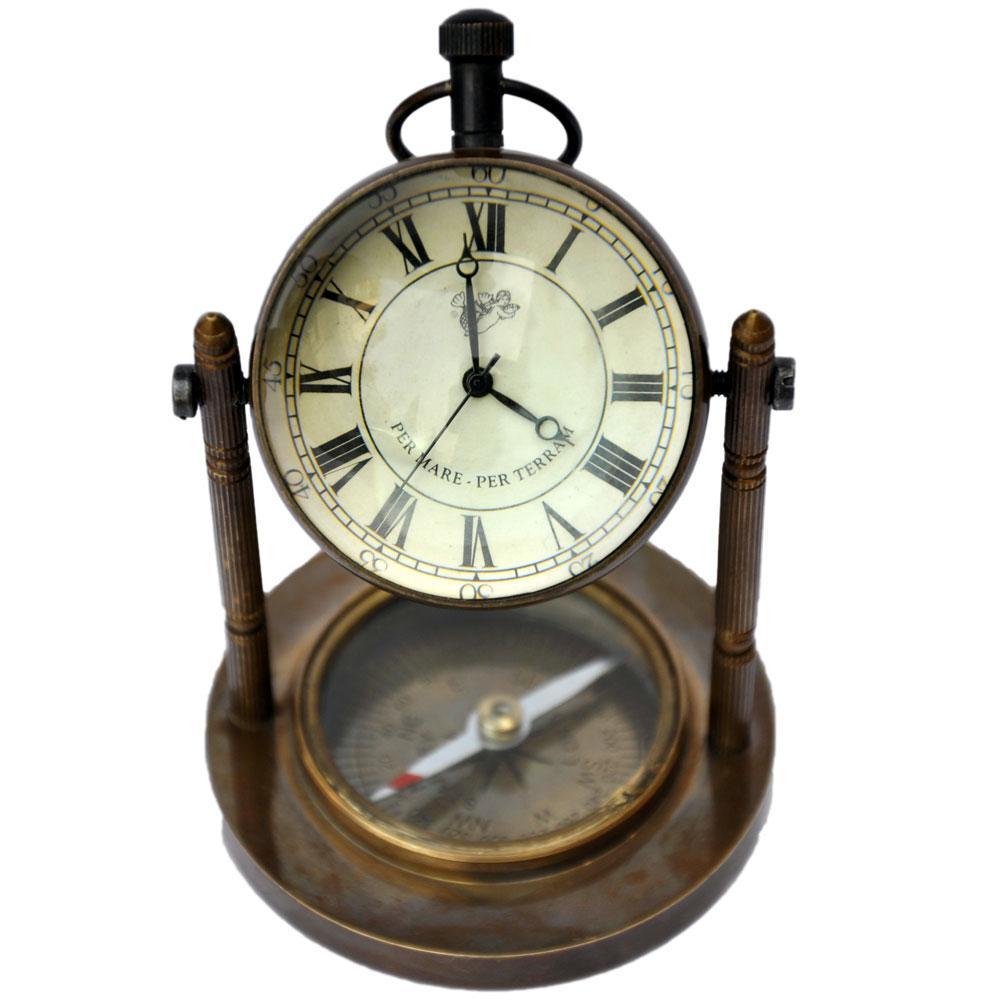
-Holy cow, I forgot to give him the compass!
- A word whose sound is reminiscent of a sneeze, from the German philosophical tradition and which means worldview.
- Freud, Introduction to Narcissism (1914). This « considerable uneasiness » was undoubtedly due to quantities of wandering excitation in the psychic apparatus, such as the Mongolian hordes that ride on the steppes of Central Asia, not bound.
- Freud, ibid.
- Martin Heidegger, What is a thing?
- Ovid, The Metamorphoses, book III, Echo and Narcissus.
- Jacques Lacan, Seminar I. The Technical Writings. July 7, 1954 (quotation freely reorganized)